EUDI Wallet in Healthcare: What eIDAS 2.0 Means for DiGAs and Health Apps

While the GesundheitsID is just finding its way into everyday DiGA use, the next major identity wave is already emerging at the European level: the EUDI Wallet. By the end of 2026, every EU member state must provide its citizens with such a digital wallet – and healthcare is one of the sectors required to accept it first. For DiGA manufacturers and Digital Health providers or developers, it pays to understand this topic now, while you can still stay ahead of the market.
This article provides an outlook: what the EUDI Wallet is, what the timeline looks like, why healthcare is particularly affected, and how the wallet relates to the GesundheitsID.
What is the EUDI Wallet?
The EU Digital Identity Wallet (EUDI Wallet) is a state-provided or certified mobile app that allows citizens to digitally identify themselves EU-wide and securely store and share trusted credentials. The legal basis is the eIDAS 2.0 regulation (Regulation (EU) 2024/1183), which entered into force on May 20, 2024.
A key feature is Selective Disclosure: users only reveal the necessary attributes – such as "over 18" or "insured by Health Fund XY" – without exposing their entire identity document. This makes the wallet privacy-friendly and particularly interesting for sensitive contexts like healthcare.
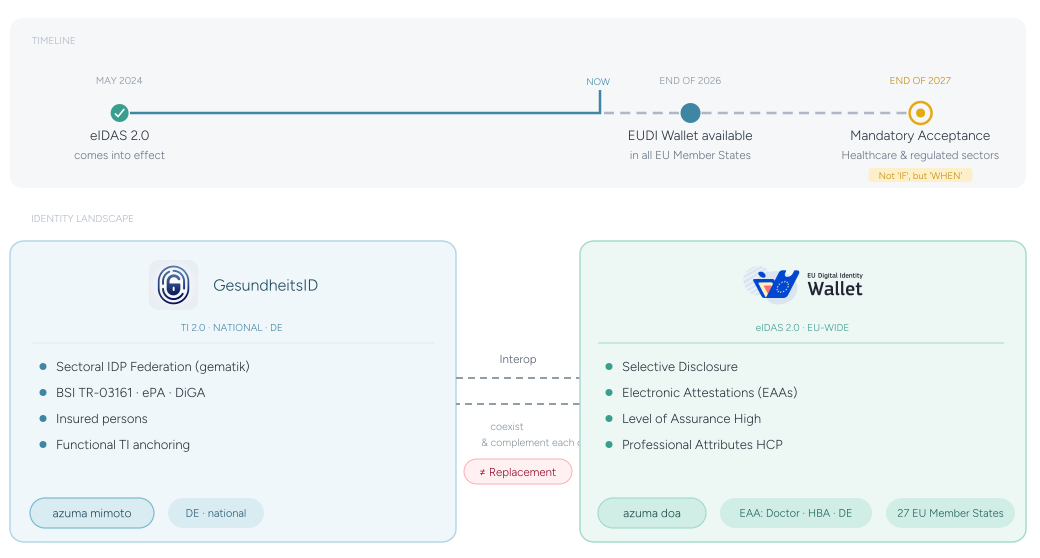
The Timeline: What Applies and When
As of June 2026, the following roadmap is emerging:
- By the end of 2026: Every member state must provide at least one certified EUDI Wallet.
- About a year later (end of 2027): Regulated sectors – explicitly including healthcare – must accept the wallet as an authentication and verification method.
- Level of Assurance: For sensitive applications, the highest level "Level of Assurance High" is mandated.
For manufacturers, this means: there is a realistic window of time to prepare – but the acceptance mandate is coming; it is not an "if", but a "when".
Why Healthcare is the Most Heavily Regulated Use Case
Particularly relevant: under the European Health Data Space (EHDS) (Regulation (EU) 2025/327), the EU Commission is working on implementing acts for identity management. According to current drafts, member states will be required for the first time to issue sector-specific Electronic Attestations of Attributes (EAAs) directly into citizens' EUDI Wallets – including professional attributes of healthcare professionals. Healthcare providers would then be required to accept these.
This would make healthcare one of the most legally entrenched use cases of the EUDI Wallet overall. For providers in the healthcare sector, the question shifts from "nice-to-have" to "regulatory building block".
Note: The EHDS implementing acts are partially still in draft form. Details and deadlines may change – please verify the current status before publication.
EUDI Wallet and GesundheitsID: Replacement or Supplement?
An obvious question – and the honest answer is: supplement, not replacement. The GesundheitsID is the national, sectoral identity within the Telematics Infrastructure (see TI 2.0 & Sectoral Identity Federation Explained). The EUDI Wallet is an EU-wide, citizen-centric identity and credential layer.
Both will coexist and increasingly interoperate: the wallet can prospectively become a carrier for identity-related credentials, while the GesundheitsID retains its functional anchoring in the TI. Exactly how this interaction will be structured is still being worked out – but the direction is clear: standard-based, federated identity on national and European levels.
What DiGA Manufacturers Should Do Now
- Rely on standards: Those who rely on OIDC/OAuth 2.0 and a clean, federation-capable identity architecture today are structurally prepared for the wallet connection – EAAs and wallet logins build on the same principles.
- Consider data sovereignty: In Germany, France, and the Netherlands, digital sovereignty is increasingly becoming a procurement criterion. European identity providers have a structural advantage here.
- Position early: The content and technical head start is largest right now – those who factor in wallet acceptance before the 2027 mandate avoid later retrofitting stress.
How azuma Categorizes This
As a Health-IAM with a European focus, azuma is exactly aligned with this development. azuma doa covers the professional or workforce side – including the prospective acceptance of professional attributes (EAAs) – while azuma mimoto provides the patient-side identity and GesundheitsID federation. Because both are built on open standards, they can be expanded by the wallet layer without rethinking the architecture.
Honestly categorized: much surrounding the EUDI Wallet in healthcare is currently an outlook, not day-to-day business. But the direction is set – and understanding what is coming early is an advantage.
Frequently Asked Questions
When must the healthcare sector accept the EUDI Wallet?
According to the current status, member states must provide an EUDI Wallet by the end of 2026; regulated sectors – including healthcare – must accept it as an authentication method about a year later, i.e., roughly at the end of 2027.
Does the EUDI Wallet replace the GesundheitsID?
No. The GesundheitsID remains the national, sectoral identity in the TI. The EUDI Wallet is an EU-wide supplement; both will coexist and interoperate.
What are Electronic Attestations of Attributes (EAAs)?
Digital, trustworthy credentials of individual attributes issued into the wallet – in healthcare, e.g., professional attributes of healthcare professionals. They can be selectively disclosed.
What specifically should we as DiGA manufacturers do now?
Rely on standard-based, federation-capable identity, consider data sovereignty when choosing providers, and include wallet acceptance early in your roadmap – then the 2027 mandate will be a small step instead of a major rebuild.
Do you want to set up your identity stack for Europe – from GesundheitsID to the EUDI Wallet? Talk to our team or get a free developer access and see how azuma implements standard-based health identity for Europe.
Status: June 2026. eIDAS 2.0 and the EHDS implementing acts are continuously evolving – please cross-check the current status of deadlines and EAA requirements before publication.